LATEST INSIGHTS

Asia venture capital is becoming more selective, but opportunity remains strong

Technical
02 April 2026
Life at Langham Hall
7 April 2022

Career first steps: what is it like to be a Graduate Fund Accountant?

You’re finishing university and are considering what career path to take. You’re interested in financial services, investment, accountancy, alternatives assets. So what’s next?

We spoke to Lily Davis who joined the Langham Hall Graduate Programme in 2020 in the Private Equity team to share her experience and what it’s been like to start her career as fund accountant.

What is your educational background?


I graduated from the University of Birmingham in summer 2020 where I gained a First in Modern Languages (German and Spanish) and Business Management. At A Level, I studied Maths, German and PE.

Why did you apply to join Langham Hall’s Graduate Programme?


Having not studied finance and accounting at university, I loved the fact that Langham Hall’s Graduate Programme offered training towards becoming a fully qualified accountant. The fusion of practical and theoretical learning was something which piqued my interest in the scheme. The chance to work for a highly reputable firm and develop personal skills such as leadership and communication was also something which drew me to Langham Hall.

How have you found starting your career in fund accounting? What kind of tasks have you completed / do you complete on a daily basis?


Since joining in September 2020, I have had exposure to a huge range of tasks within fund accounting; bookkeeping, management accounts, payments, investor queries. Additionally, I have now successfully completed an audit, which provided a new challenge that I enjoyed undertaking. Having spent time preparing these key deliverables, I am now gaining experience in the review process; a rewarding task, allowing me to see how much I have learned within the last year and a half. This progression has been aided by members of my team who have supported me and my ambitions, and I have been given opportunities to broaden my horizons within my team, and on a larger, company-wide scale.

What have you enjoyed the most about working at Langham Hall?


I have always loved learning and working in a team. At Langham Hall, I am constantly learning and developing skills, while also working alongside a group of likeminded, aspirational people who are incredibly approachable and helpful. These factors keep the work interesting and enjoyable.

How do you feel Langham Hall has encouraged your professional growth?


I have been given many opportunities to develop professionally since joining Langham Hall. There are always chances to take on extra responsibility, either within your team, through having oversight of more tasks, or within the broader company, where you can complete extra trainings or join the various committees. The range of clients to work on also presents the opportunity to learn about multiple investments and the way the different Funds operate.

Langham Hall offers study days and all necessary material for the accounting exams. Juggling work and study is arguably the most challenging aspect of the role, but one which is also incredibly rewarding and in-line with personal aspirations to become qualified. The tasks within my work have helped consolidate my studies, where I am able to put theory into practice.

Where do you see yourself in 5 years’ time?


In 5 years, I will have completed all my ACCA exams and be a qualified accountant. I will have accumulated extensive insight into the behaviour of Funds and successful investments. I plan to use this knowledge to manage my own team of people and find new challenges through which I can develop and progress professionally.

What’s the best piece of advice you could give to someone who’s looking to apply to a Graduate Programmes?


Be open to new learning experiences and embrace every opportunity. We learn most from asking questions and making mistakes, so have confidence in your intellectual aptitude and be inquisitive, because there’s always something to learn.

If you are interested in a career at Langham Hall, reach out to our HR team and check the latest vacancies here.

Technical
29 March 2022

The new UK REIT regime: implications for real estate fund managers

The rules for UK REITs were first introduced in the Finance Act 2006, and since then the number of UK REITs has grown to more than 100. In this time however, the real estate sector has evolved, and the number of large institutional investors in REITs has increased, meaning elements of the current regime have become outdated whilst creating an unnecessary cost and administrative burden for managers.

Following the 2020 Budget, HM Treasury launched a consultation on tax treatment of asset holding companies (‘AHCs’), which included REITs and their use by real estate fund managers. Following the conclusion on 23rd February 2021 of two consultations relating to AHCs, HM Treasury announced changes to the REIT regime aimed at enhancing the attractiveness of the UK for real estate investment.

The changes include amendments to the tax rules applying to REITs, and take effect from 1st April 2022.

What are the changes?

The proposed changes to the regime include amendments to the listing requirements, as well as changes to the tax rules for REITs. Most notable changes include:

  • Listing requirement - Removal of the requirement for REIT shares to be admitted to trading on a recognised stock exchange in cases where institutional investors hold at least 70% of the ordinary share capital in the REIT.
  • Equivalence to a UK REIT - Relaxation to the definition of an overseas holding structure to be equivalent of a UK REIT, so that the overseas entity itself, rather than the overseas regime to which it is subject, needs to meet the equivalence test.
  • Holders of excessive rights - Removal of the ‘holders of excessive rights’ charge, where property income distributions (‘PIDs’) are paid to investors with a greater than 10% holding. This rule will be relaxed for shareholders entitled to gross payment of distributions (such as UK tax resident companies or pension funds).
  • Balance of business test – if group accounts for a period show that property rental business profits and assets comprise at least 80% of group totals, a REIT will not have to prepare the additional statements which would be required to meet the full test. Further, non-rental income generated by a REIT in complying with certain planning obligations can now be disregarded in all parts of the balance of business test.

What does this mean for fund managers?

For real estate investors, the REIT regime has long been an attractive way to hold income generating property in a tax efficient manner. However, to date, the listing requirement has caused an additional burden for those managers looking to utilise the regime for the holding of income producing assets. More recently we have seen some managers using The International Stock Exchange for listing of REITs, where there is no free float requirement, but the listing requirement still remains.

Key benefits of the new UK private REIT:

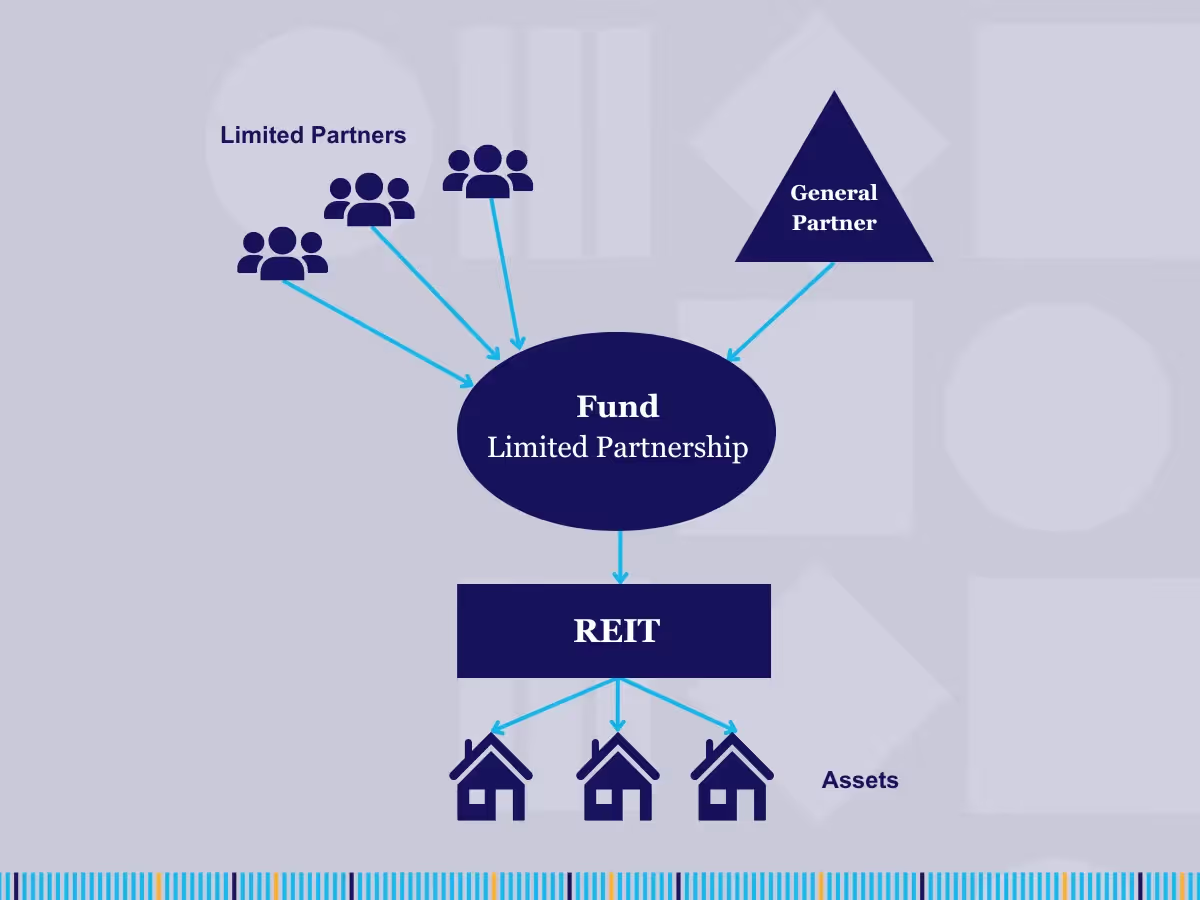
  • In the UK, a REIT is not taxed on income and gains from property rental business, with the tax being paid by shareholders upon distribution instead, the new rules will make it far easier for private fund managers to utilise a UK REIT to both attract new capital and also to hold real estate and distribute income in a tax efficient manner.
  • The REIT brand is well recognised by global institutional investors, with around 40 countries globally currently having an equivalent regime.
    Removing the listing requirement will also reduce the administrative burden placed on managers and their service providers, so these structures will have a lower operating cost than listed REITs.
  • In addition, REITs will qualify as a “relevant qualifying investor” under the new Qualifying Asset Holding Companies rules, making the REIT increasingly attractive for investing in non-UK assets whilst retaining structures onshore.

There are trade-offs to consider:

  • Reduced liquidity when compared with e.g., a main market listed REIT, but for many institutional investors that routinely invest in closed-ended funds, this will be part and parcel of doing business in real estate.
  • Managers also need to be aware that whilst a private REIT has a reduced operational burden when compared to a listed REIT, the REIT rules still need to be adhered to, for which specialist third party tax advisors are recommended.
How can Langham Hall help?

Langham Hall remains the largest independent administrator of Real Estate funds in the UK, working with both listed and private REITs. We are able to provide a full suite of administration and AIFMD services to these structures, including REIT administration, accounting, depositary and host AIFM services.

With these new changes coming into effect on 1st April, we expect to see a rise in the number of managers utilising the new REIT regime, and indeed we are already working with several clients looking to take advantage of this.

Life at Langham Hall
8 February 2022

National Apprenticeship Week 2022 – the Langham Hall experience Q&A

Deciding what path to take after school can be a daunting decision, do you continue onto a Sixth Form, go to college, or consider an apprenticeship?

Apprenticeships are an exciting option, where you get hands-on training while simultaneously putting the skills you learn into practice.

As we celebrate National Apprenticeship Week 2022, we spoke to Samuel Highmoor, a trainee accountant undertaking an apprenticeship with our Internal Accounts team, whilst completing his AAT - Assistant Account Apprenticeship Level 3. We asked Sam to shares his experience and recommendations to anyone considering taking this route into employment.

Q: Why did you decide to do an apprenticeship?
After being at university for two years, I wasn’t enjoying my course and didn’t see myself finishing it. I started an apprenticeship as this allowed me to carry on learning while entering the job market. This was good for me as I feel I am quite a practical person, all the things that I learn on my course apply back to something I am working on.

Q: What kind of tasks have you completed / do you complete on a daily basis?
I run timesheet and debtors reports to help senior management see how the business is running. On a weekly basis, I process the payment run for suppliers and deal with administrative task on our Practice Management Software. I also do the bank reconciliations and have started taking on parts of management accounts preparations.

Q: What has been your biggest challenge during your apprenticeship so far?
My biggest challenge has been managing my time and organisation of my workload. This includes learning how to create effective plans so that deadlines are met, whilst communication with my team on my current capacity to take on new work. This is an important skill I’m learning early on in my career as I continue to take on more responsibility. Being able to share my experience with my co-workers has meant that I’ve gained an insight into their work styles to help me develop my on working and organisation method. These are valuable skills that you learn outside of a traditional study environment.

Q: What do you hope to be doing in five years’ time?
In 5 years, I hope that I am fully qualified as an accountant.

Q: What’s the best piece of advice you could give to someone who’s looking for an apprenticeship?
I would highly recommend an apprenticeship, as you get both an education and work experience all in one. Apply to as many places as possible and don’t be afraid of being rejected. The right company and opportunity for you is out there. Find a team where you can learn and grow.

Langham Hall offers a diverse range of apprenticeships spanning from our operations and compliance team to internal accounts and Technical/Systems. We are keen to widen the range of departments that support apprenticeships as the development of young talent ensures we are training staff from the bottom up. Team growth and succession planning are key to our talent strategy and apprentices are become increasingly important in supporting this aspect of our growth plans.

At Langham Hall apprentice’s sign-up to an 18 month or 3-year apprenticeship depending on the level of qualification they are completing. They are assigned to a specific department or business area where their job role directly relates to their qualification. Each apprentice has a mentor to support them through their qualification and study leave to allow time to complete their training programme.

If you are interested in our apprenticeship opportunities, get touch with our HR team.

Technical
7 February 2022

FCA consultation on the Appointed Representative regime: proposed changes and next steps

On the 3rd December 2021, the Financial Conduct Authority (‘FCA’) and HM Treasury in the UK issued papers seeking industry feedback on proposed changes to the Appointed Representative (‘AR’) regime. The deadline for responses to the two papers is set for 3rd March 2022 and it is expected that the FCA will publish final rules on the back of their consultation paper in the first half of 2022. HM Treasury will consider responses and currently there is no stated expectation of immediate legislative changes.

In this briefing, we set out a summary of the proposed areas of reform with more emphasis on the impacts on Appointed Representatives.

The consultation on the proposed reforms is centred around (i) increasing information requirements from the AR to the Principal and correspondingly, additional information to be reported to the FCA; (ii) more stringent requirements on the Principal in relation to its own infrastructure and resourcing for monitoring ARs. Despite the concerns surrounding the usage of the AR model, the FCA believe that there continue to be benefits to the AR regime, including cost effectiveness, supporting FCA engagement with firms and providing an “incubator model” to allow unauthorised companies to trial new services and products, in turn allowing innovation and healthy competition.

Proposed changes at onboarding stage

In addition to the current information to be provided to the FCA, Principals will now need to file the following additional information on appointing a new AR:

  • Primary reason for appointing the AR
  • Nature of the regulated activities the AR will undertake
  • Non-regulated business of the AR, including:
    Nature of the non-regulated business (financial services products or services or non-financial products and services)
    Proportion of non-regulated activities to regulated activities in the first year following appointment
  • Whether the AR will provide services to retail customers
  • Whether the AR operated under a different Principal previously and, if so, why it has moved
  • Whether the AR is part of a group and, if so, the name of the parent firm
  • Whether any individuals from the AR will be seconded or contracted to the Principal for portfolio management or dealing activities and, if so, the rationale for this
  • Information about the financial relationship between the AR and the Principal
  • Anticipated revenue from regulated and non-regulated activity for the first year after appointment.

This information must be provided at least 60 days before an AR is appointed, and the FCA public register is proposed to include the specific regulated activity the AR is authorised to undertake. In practice this appears to set a minimum AR onboarding period of at least 60 days. There is also the issue of industry clarity on what constitutes regulated and unregulated activities in order to properly make the disclosure and ensuring proper advice is taken in such matters. Existing ARs are not exempted from disclosing this information and the FCA will set a timeline for such information to be filed.

Proposed changes for ongoing monitoring

Any changes to the information filed at the onboarding stage will need to be notified to the FCA before or within 10 days of such change taking place (depending on the change). In addition, the Principal is required to verify that such information remains current annually, as well as file details of complaints regarding the AR, and details of the revenue streams from the regulated and non-regulated activities of the AR.

The FCA has imposed more specific monitoring obligations on the Principal including:

  • Scrutiny of the experience of personnel of ARs for the relevant business, and the time commitment to perform tasks and functions required in the business
  • Oversight of the AR to be commensurate with the size of the AR’s business and the specific activities that it undertakes
  • Consideration of the control and oversight framework for specific ARs
  • Scrutiny of financial and management information
  • Recommendation of adoption of a service level agreements to set out clear expectations around escalation of issues
  • Consideration of potential risk of harm to the AR’s clients

Most of the above are to be reviewed at least on an annual basis and more frequently where the AR’s business has grown quickly in a short period of time, turnover in revenue or staff is unusually high, or where the AR changes its business model or scope of activities.

Further obligations on Principals

The FCA has set out specific circumstances where Principals should look to terminate the AR relationship including:

  • Issues with the AR have not been resolved satisfactorily or within a reasonable time frame
  • If senior management turnover at the AR is high and there isn’t a reasonable explanation
  • If the AR carries on regulated activity not within the scope of the agreement
  • If the AR intentionally misleads its customers in any way
  • If any senior manager at the AR Is dismissed for gross misconduct

Additionally, there may be potential further requirements of Principals who are engaging ARs as part of a regulatory hosting business.

HM Treasury’s call for evidence

Separately to the FCA’s consultation, the Treasury is also calling for evidence on the AR regime and is exploring potential amendments that relate to the following areas:

  • Changes to the scope of the AR regime
  • Enhancing the role of the FCA in relation to the AR regime including potentially requiring an additional FCA permission to undertake a regulatory hosting business
  • Placing more regulatory obligations on ARs by extending the Senior Managers and Certification Regime to AR personnel
  • Extending the ability of Financial Ombudsman Service to investigate complaints involving activities of ARs including potentially making the
  • Principal responsible for all the AR’s regulated activities, even if the AR is acting outside terms of agreement.
Next steps

Whilst the above proposals are still in consultation stage and subject to change, the direction of travel is clear in that the data collection from the AR and oversight by the Principal will increase. We have seen recently that time frames for the appointment of ARs has lengthened and further enquiries from the FCA on new appointments are more frequent despite the new rules not having been adopted. The changes and increased responsibilities and liability on the Principal is likely to result in an increase in the fees from regulatory hosts for the appointment of ARs. The FCA itself has also since 2021 imposed a £250 annual fee for each AR and there is a requirement to consider the additional risks of the ARs on the calculation of regulatory capital of the Principal.

As a result of these changes, some businesses may seek direct authorisation, but the case for acting as an AR of a specialised regulatory host remains a compelling one. Advantages include:

  • No requirement to provide own regulatory capital which is now a minimum of £75,000 or a quarter of previous year’s overheads
  • A reputable host will be experienced in the sector in which the AR wishes to conduct business, and can be a great resource on market information and best practice
  • Access to specialised expertise on the practical implementation of the regulatory regime relating to the AR’s business
  • Relying on a business specifically set up to keep up to date with regulatory changes in the specific sector as opposed to reliance on an internal compliance officer to digest the high volume of regulatory changes affecting the industry.

Current ARs and those businesses considering being appointed as ARs should take stock now to consider how the above proposed changes may change their existing, and proposed plans for personnel and business infrastructure. This should include considering regulated and non-regulated activities and whether the AR model is still the most suitable model for the business and/or whether their current Principal is still a good fit for their business.

Technical
27 January 2022

2022 regulatory outlook for fund managers

We enter 2022 with the effects of the global pandemic still lingering, with restrictions continuing in pockets around the world. However, most countries find themselves in a far better position now than they were at the start of the pandemic, and the year ahead is much brighter.

For our industry, alternative assets have proved resilient throughout the past two years, with a significant proportion of institutional investors looking to increase their allocations to private markets amidst record levels of fundraising during 2021. Looking to the next 12 months, we believe there remains a great opportunity for managers of private funds, but this will not be without challenges. Increased regulatory scrutiny, greater tax complexity, inflationary fears and enhanced competition for capital will all play their part. Below we set out some key regulatory events that managers should be aware of for 2022.

SFDR

The Sustainable Finance Disclosure Regulation (‘SFDR’) came into force on 10 March 2021, requiring managers of AIFs being marketed in Europe to make pre-contractual disclosures regarding how sustainability risks are integrated into their investment decisions.

The next part of the SFDR is the implementation of the Regulatory Technical Standards (‘RTS’) rules. Originally planned to come into force on 1 January 2022, the RTS deadline was pushed back six months and will now come into force on 1 July 2022. This deadline will apply to managers of Article 8 or Article 9 products (i.e. not Article 6 products, nor those that do not promote ESG characteristics), and will only apply to those that promote two of the six environmental objectives outlined in the Taxonomy Regulation: climate change mitigation and climate change adaptation. The rules will apply to the remaining four objectives from 2023.

For funds that meet these criteria, there are additional pre-contractual disclosures required, as highlighted by the relevant annexes of the RTS, as well as new disclosures in periodic reports. Broadly, these disclosures aim to provide transparency as to the success of the product in meeting its sustainability objectives. Clearly this is a complex piece of legislation that we are carefully considering on behalf of our clients.

AIFMD II

On 25 November 2021, the European Commission published its proposal for amendments to the existing AIFMD. Notable proposed amendments include:

  • Changes to the National Private Placement Regime (‘NPPR’) framework
  • Changes to delegation arrangements for authorised AIFMs
  • New substance requirements for EU AIFMs
  • Increased disclosures under Annex IV reporting
  • Changes to the depositary framework

These proposed changes are yet to go through the standard EU legislative process, and we do not expect to see AIFMD II implemented until 2024 at the earliest, although managers should be aware of responses being issued by industry bodies as well as how these proposals might affect their business planning in the medium term.

FCA consultation on Appointed Representatives in the UK

The Appointed Representative (‘AR’) regime has been used by fund managers since the turn of the millennium, to assist those starting up a new regulated business in the UK. Recently, there have been a handful of appointed representatives that have been deemed by the FCA to have done “harm” to the regime, and it points to a lack of due diligence, or inadequate oversight by the principal as the cause of this.

In response, the FCA has launched consultation CP21/34 in which it proposes changes to the regime, including requiring principals to provide more information on their ARs, as well as strengthening the responsibilities and expectations of principals. The FCA has requested feedback on these proposals by 3 March 2022 and we expect to see any proposed changes implemented subsequently. We will be publishing our own response to the consultation shortly.

IFPR

Following several consultations throughout 2021, the new Investment Fund Prudential Regime (‘IFPR’) rules came into play on 1 January 2022. The IFPR rules aim to streamline and simplify prudential requirements for firms regulated in the UK under MiFID, and the final rules can be found in FCA 2021/38 and FCA 2021/39. Key points to note include the increased regulatory capital requirements, new reporting and remuneration rules, and increased disclosure requirements.

Annex IV Reporting for UK Funds

A year on from the end of the Brexit transition period, some managers of UK funds now find themselves having to file multiple Annex IV reports in Europe. Whereas previously a single report was filed to the FCA, now managers that have raised capital under the AIFMD passport from a UK structure are required to file an Annex IV report in each country from which they have accepted subscriptions. 31 January 2022 will be the first reporting period for many of these managers, and you can read our update on this here.

US Private Fund cybersecurity rules

From 9 December 2022, private funds in the US that are excluded from the definition of “investment company” will face increased cybersecurity requirements under the Federal Trade Commission’s Safeguards Rule. This will include a requirement for multifactor authentication to access customer data, encryption of data when sending and storing, and updates to record retention procedures. Private Fund managers should consider how the rules may affect them well in advance of the December deadline.

Clearly there are, as ever, several new regulatory developments for fund managers to keep abreast of. We are keeping a close eye on all these developments and are happy to discuss how we may be able to help in each case.

Company News
20 January 2022

Managing Partner’s update 2022

Operationally 2021 was challenging, not just for advisors but also for fund managers and investors. Adapting businesses to suit the shifting aspirations of staff while continuing to service the indefatigable demand for new product has proved an interesting combination.

Some interesting trends emerged this year. The largest real estate and private equity fund managers were able to launch new product successfully, partly as LPs struggled to meet new GPs and partly due to perceived reduction in risk. Repeat mid-market fundraises for the highest quality managers were also still successful, albeit a great deal of work for teams numbering between 10 and 30 people. Competition for deal flow became more intense, with managers needing to hold their nerve and stick to underwriting models when acquiring assets. As far as I can tell, people are being disciplined and gearing levels remain sensible.

It’s the lower mid-market where we’ve seen most change over the past 12 months. Private equity funds have adapted to a change in strategy, both in terms of industry focus with more technology, healthcare, food science and social impact funds coming to market, but also in how they measure the non-financial performance of their funds in terms of portfolio company KPIs. By this I mean ESG related factors and the speed with which they can adapt their focus. It has been much harder for lower mid-market real estate. Retail and offices have suffered greatly over the past two years leaving managers to focus on the overheated residential and industrial sectors. Although a handful of niche sectors are developing, generalist mid-market first time funds are very difficult to raise. The consolidation of UK investors, their propensity for direct investing, and the difficulty converting existing buildings into tenant and environmentally friendly assets, means that the headwinds for smaller fund managers will take a while to navigate and they will be confined to deal by deal strategies for the time being. That said, there is a great deal of investible cash looking for inflation proof investments, so the future still looks very positive.

Langham Hall Group Update

The group achieved organic turnover growth of over 25% in 2021, with our headcount growing from 480 to 580 people. A combination of repeat funds across all jurisdictions, together with greater complexity such as co-investment, parallel vehicles and complex underlying structures, all contributed. We observed a continued shift of funds to Luxembourg and a significant number of US GPs entered the AIFMD environment, sometimes with limited Annex IV reporting or depositary light services but many opting for full parallel fund services, such as host AIFM, administration and depositary services. The new generation of lower mid-market private equity funds have resulted in significant growth of the Guernsey business over the past 12 months. The US and Asian markets remain buoyant and continue to see significant growth. Our Asian business remains the largest administrator of private equity funds locally.

I have included summaries below from each of our jurisdictions:

New York

The US business grew from 14 to 20 people this year, adding several valuable private equity and real estate clients. We are moving into new offices early this year to accommodate growth and issued the first SOC 1 controls report in 2021. We are in the process of completing the second annual SOC 1, to be issued in early 2022.

London

In the UK our private equity business grew 50% last year – an outstanding achievement given some lingering post-Brexit uncertainty. This was made up mostly of mid-market UK focused private equity fund managers. The real estate business continued to post double digit growth despite significant headwinds, such as the lack of lower mid-market funds. We continued to be the market leader in the UK for depositary and Annex IV reporting, mostly for US funds marketing in Europe. We added 20 new US GPs in 2020 and 40 GPs last year. There are now seven clients in the $5-10bn commitment range.

Hong Kong and Singapore

Our Hong Kong and Singapore teams continued to support their significant portfolio of Asian managers with new fund raises, while winning and onboarding new high-quality managers in Singapore, Japan and Korea. The Wolfram team continued to develop its fund KPIs dashboard and, in collaboration with Wolfram, developed a new Transaction Capture tool. Due to expansion the Singapore office signed a lease for its own office space.

Luxembourg

Our Luxembourg office remains a leader in the servicing of RE and PE funds and is one of the fastest growing jurisdictions, with a current headcount of approximately 140. The excellent reputation, client base and sustained growth of the Luxembourg business meant that it attracted some of the highest quality funds in the market. Staff retention remained strong, despite the challenges in Luxembourg.

Guernsey

Guernsey continued to grow, and the team increased from 24 to 39 people over the past year. It received great feedback from clients, whilst acquiring several significant new mandates, and staff members achieved exam success across the board. As well as launching successor funds for almost all clients last year, a number of high-profile clients have moved over to us. Langham Hall is now seen as one of the go-to fund administration businesses in Guernsey, and all credit to the team for achieving this reputation.

Jersey

Existing clients, who are not reliant on Europe for their investor base, continue to support our Jersey business. We closed one fund at over €1bn and two more of that size are in the pipeline for existing clients, ensuring the business retains double digit growth. Both Jersey and Luxembourg completed the successful roll out of their new compliance databases.

Host AIFM

The AIFM business in Luxembourg has achieved the highest percentage organic growth amongst our competitors, at 100% year on year growth of new funds under management against a peer group average growth of 42%. This growth occurred in an increasingly complex legal and regulatory environment around Brexit, pre-marketing and marketing cover in the EU, new laws around ESG and taxonomy and ever tighter ESMA and CSSF scrutiny.

Group-wide initiatives

There are many exciting group-wide initiatives underway too. We are in the middle of the design phase of our new website and ESG is featuring significantly in our client work. We used our Wolfram computable data technology to develop our prototype ESG dashboard last year and are looking to test this on clients and enhance it this year. The new Development Pathway training initiative aims to enhance the way people learn at Langham Hall.

In closing, I remain thankful that, despite the challenges, we have been able to grow the business. I would like to thank our clients, staff and advisors for their loyalty and support. I am excited about 2022 and look forward to what the next twelve months will bring.

Best wishes,

Rob Short
Managing Partner

Technical
13 January 2022

Annex IV reporting for UK Funds

On January 1st 2021, the Brexit transition period came to an end, which meant that all UK domiciled Alternative Investment Funds (‘AIFs’) and Alternative Investment Fund Managers (‘AIFMs’) are now treated as “third-country” for the purpose of the Alternative Investment Fund Managers Directive (‘AIFMD’).

Previously, for UK domiciled AIFMs and AIFs Annex IV reporting was only required to be filed with the FCA as the home regulator. However, since the end of the transition period, any UK AIFs that have investors from EU jurisdictions which were marketed to under AIFMD must now submit Annex IV reports to every country from which they have accepted subscriptions (except where there has been genuine reverse solicitation).

There is no harmonised system for completing and filing these reports across the EU, rather each regulator has its own reporting portal with various nuances in reporting format and process. This reporting burden often falls to fund finance or compliance teams who may be unfamiliar with the reporting process, which will be required for all AIFs by 31st January 2022, and potentially as often as quarterly thereafter depending on the requirements.

Langham Hall has been completing Annex IV reporting for non-EU AIFMs and AIFs since 2014. We prepare and file hundreds of annex IV reports each year and are familiar with each regulator’s reporting portal. Langham Hall is able to set up the portal access for each country, and complete and file these Annex IV reports in the relevant formats required by each regulator. We file these reports directly with the regulator with minimal involvement required from the fund manager

Technical
2 September 2021

The investment process when using a Luxembourg Host AIFM

Since 2013, Alternative Fund Sponsors wishing to market their funds into Europe have had to navigate the Alternative Investment Fund Managers Directive (“AIFMD”). In recent times, fund sponsors are getting more familiar with AIFMD, and the optionality of using a Host AIFM to provide a robust regulatory framework without spending upfront time and expense in getting their own AIFM licence.

It has been the case from the outset that institutional investors around Europe have accepted this model, and indeed it has been no bar to fundraising, whilst providing a solution for those investors (usually German pension funds and insurance companies) who prefer to operate in an AIFMD compliant fund structure rather than an offshore structure. However, AIFMD remains a complex piece of regulation and non-EU Fund Sponsors in particular are not used to handing over the reins to a third party service provider, who is by law bound to look after the best interest of investors.

Nevertheless, we have recently seen an uptick in interest in Host AIFM services in Luxembourg from those non-EU Fund Sponsors looking to market to the large pool of institutional capital found in Europe. US and Asian fund managers are reviewing this option again when they need (i) to speak to investors in jurisdictions with unworkable national private placement regime (such as Spain, Italy and France), (ii) and to set up a fully AIFMD compliant parallel vehicle to accommodate the specific requirements of, inter alia, German institutional investors. A Host AIFM solution is a quick and cost efficient way to achieve their commercial objectives, rather than to go through the process of setting up an AIFM themselves in Luxembourg, especially in light of the detailed infrastructure and personnel requirements as outlined by the CSSF in Circular 18/698 released in August 2018.

There are many advantages to appointing a Host AIFM, but the perceived loss of control in the investment making-decision process is often the largest concern of fund managers. Ultimately, there is another party involved. The fund counsel and the Host AIFM therefore should explain what is required at the outset. The typical questions usually concern:

  • The allocation of responsibilities between the General Partner (‘GP’) and the AIFM. It is important to be aware of the market practices as there is no clear guidance in the relevant regulations.
  • The difference between the advisory model and the delegated management model. The latter is now the preferred route to minimise the Host AIFM involvement in a decision-making process, subject to the fund sponsor’s regulated status in their home jurisdiction.
Allocation of the powers between the General Partner and the Host AIFM:

Today in Luxembourg, most of the investment funds which are fully AIFMD compliant are established as an unregulated limited partnership managed by a GP which in turn needs to appoint a full scope AIFM (‘Alternative Investment Fund Manager’). AIFMD is practically silent on the role of GP. Under the Luxembourg Company Law, the strategy and management of a fund remains the legal responsibility of the board of the GP.

This being said, the AIFMD defines AIFMs as any “legal person whose regular business is managing one or more AIFs”. “Managing AIFs” is then defined as “performing at least investment management functions for one or more AIFs” (the investment management functions being portfolio management and risk management).

Even if there is no single definition of portfolio management in the relevant regulations, it usually involves the process of selecting, acquiring, managing and disposing of the assets of the AIF.

Keeping this in mind, it is therefore crucial that the fund documentation is properly reviewed to avoid confusion, and to clearly differentiate the allocation of functions between the GP and the AIFM. The constitutional documents of most AIFs usually states that the GP shall have all rights and powers with respect to the AIF that may be vested in the GP under the corporate law, subject to any limitations specifically set in the AIFM agreement and provided that the GP shall not do anything or exercise any powers which constitutes a regulated activity under the AIFM regulation.

In practice, it means that anything related to the investment approval is within the AIFM scope, i.e. the approval of the investment itself, CAPEX budgets if any (in the case of real assets) and follow on investments (in case of private equity and venture capital). There are differing views on whether financing (including the hedging policy) is allocated to the AIFM but the prudent view to take is that the financing assumptions should always be taken into account when approving an investment, obviously subject to the GP reserved matters.

The role of the GP will be limited to the coordination of the capital pursuant to investment approvals of the AIFM. The execution of the transaction documents usually takes place at the level of special purpose vehicles (‘SPVs’) in accordance with the legal and tax requirements of the jurisdictions where those SPVs have been established.

In this context, it is necessary to agree and document the operating model in advance. It will enable all parties involved in the investment process to work together to approve and execute all the transactions on a timely basis. It can also be very convenient to work with a service provider that can offer a “one-stop shop” solution, i.e. Host AIFM, administration and depositary services. This model allows the service provider to fully coordinate the investment approval process, particularly in respect of the Host AIFM and the GP (usually administered by the service provider).

Advisory vs Delegated Portfolio Management

When a Fund Sponsor appoints a Host AIFM, the investment management process can be managed applying either the advisory model or the delegated model. The Fund Sponsor will be involved in the investment process by acting as a portfolio manager (delegated model) or as an investment adviser (advisory model).

Delegated model:

Under the delegated model, the portfolio manager makes all the investment decisions, and the Host AIFM then carries out oversight of the portfolio management activities and undertakes the risk management function.

In funds with illiquid strategies which are investing in non-fungible assets, the investment decision and risk management considerations are necessarily intertwined, with both qualitative and quantitative risk factors needing to be considered (unlike hedge fund AIFs where the risk management is mostly a quantitative check on investment limits). What happens in practice is that the investment paper prepared by the portfolio manager is also reviewed by the AIFM for risk management. Under AIFMD, the AIFM can only delegate either the portfolio management or risk management functions, but not both. However, the commerciality of the decision will be decided by the portfolio manager and the AIFM will note the risks of the transaction.

The AIFM’s liability towards the AIF and its investors will not be affected by the fact that the AIFM has delegated functions to a third party, therefore it is imperative that the AIFM understands from the outset the portfolio manager’s internal investment process and has done the requisite due diligence required under AIFMD. Consequently, a delegated portfolio manager must also comply with the requirements of AIFMD, the portfolio manager will have additional obligations and requirements to handle including regular reporting to the AIFM.

Requirement for a portfolio management licence:

To act as the portfolio manager, the entity must be authorised or registered to provide asset management services, and subject to supervision in its home state, or, where that condition cannot be met, prior approval by the Commission de Surveillance du Secteur Financier (‘CSSF’) will be required before to taking up the portfolio manager role.

The following entities are deemed to be authorised or registered for the purpose of asset management and subject to supervision: UCITS management companies, investment firms authorised under MiFID to perform portfolio management, and third country entities authorised or registered for the purpose of asset management and effectively supervised by a competent authority in those countries. Where the delegate is a third country undertaking, cooperation between the CSSF and the supervisory authority of the portfolio manager must be ensured. This cooperation is usually evidenced by a Memorandum of Understanding (‘MoU’). A list of all MoUs entered by the CSSF with foreign regulators is available on the CSSF website.

Compliance with the European Securities and Markets Authority (‘ESMA’) Remuneration guidelines:

The AIFMD provides that each AIFM must have remuneration policies and practices for prescribed categories of staff. When portfolio management is delegated, the ESMA Remuneration Guidelines require that the delegate should be subject to regulatory requirements on remuneration that are equally as effective as those applicable under the Remuneration Guidelines. There are also disclosures to be made usually in the annual accounts of the fund.

Host AIFM supervision of the portfolio manager:

It is crucial for the Host AIFM to ensure that all investment decisions on behalf of the fund are carried out in compliance with the objectives, the investment strategy, the risk profile and the risk limits of the fund. In practice, the AIFM would, having satisfied itself of the infrastructure, professionalism and commercial acumen of the portfolio manager, leave the decision-making process to the portfolio manager and only intervene and raise any questions if really necessary, and on a timely basis. Relying on the commercial acumen of the portfolio manager, it is expected that if the AIFM raises any issues, it is mostly for clarification on an investment or ensuring regularity with market practice and compliance with the investment restrictions and laws in the process of transacting.

Furthermore, the portfolio manager will provide to the Host AIFM all information concerning the investments to enable the Host AIFM to fulfil its duties in relation to risk management and liquidity management.

Conflict of interest:

The AIFMD precludes delegation in circumstances where it conflicts with the interests of the AIFM or investors of the relevant AIF. This may be applicable if the delegate itself is controlled by an investor in the relevant AIF, or the delegate is likely to have a financial or other incentive to favour the interest of another client over the interests of the AIF or the investors in the AIF. The Host AIFM would usually declare in the AIFM agreement that it may act for other funds with the same strategy and will only consider transactions which are proposed by the appointed portfolio manager.

Advisory Model:

Under the advisory model, the investment advisor advises the AIFM with respect to the investments and divestments of the fund. The investment advisor would usually still have its own internal investment committee meetings, but it is the investment committee of the AIFM that makes the decisions based on the recommendation of the investment adviser. The investment advisor’s activities comprise of sourcing opportunities, conducting due diligence, providing investment recommendations, assisting with carrying out the transactions and assisting with reporting in the management of the investments. Note that the investment committee of the AIFM can possibly include personnel of the investment advisor subject to certain restrictions (i.e. an advisory role without any voting rights).

Does the fund sponsor need a licence?

Investment advisers may be regulated (i.e. authorised and supervised) or unregulated (albeit under certain conditions). EU investment advisers which provide advice to third parties in respect of one or more transactions relating to financial instruments, must be regulated. Non-EU based investment advisers may have to register with the CSSF unless they are appointed by the Host AIFM and/or fund on a reverse solicitation basis1. This registration requirement recently introduced by the CSSF applies until activation of the third country MiFID passport. The purpose is for the CSSF to assess whether the non-EU adviser is subject to equivalent regulatory requirements in its home jurisdiction prior to authorising any services to Luxembourg based professional clients (such as the Host AIFM and/or the fund).

From one jurisdiction to another, the requirement for permissions and the scope of authorised activities can be significantly different. The fund sponsor may need therefore to seek legal advice from the fund counsel and the Host AIFM.

How to mitigate the risk of delay?

As mentioned previously, one of the key concerns fund sponsors often have with the Host AIFM model may be the loss of control in the investment decision-making process, and the risk of delay in the execution of the transaction. This is particularly relevant under the advisory model, and even more so when there are many investments (i.e. secondary markets or venture capital). It is therefore crucial for the fund sponsor to discuss and clearly understand how the investment process will work in practice. Under this model, the typical investment approval process consists of three key steps.

First, it is necessary for the Host AIFM to have a clear understanding of the deal pipeline on a regular basis. Sharing, for example, a pipeline report every month is considered good practice, including details of the current stage of each opportunity. Investment papers/details can be batched for approvals.

Then, as the Host AIFM will approve any due diligence budget for new projects, it can also take the opportunity to review the key terms of the investments, and perform a preliminary check against the investment strategy and the investment restrictions. This approval typically takes place between 3-5 days before the start of the due diligence process.

Finally, once the host AIFM has sufficient understanding of the deal, and assuming all the required information has been received from the fund sponsor on a timely basis, then the final approval will take a maximum of 48 hours. Key to timely sign off from the Host AIFM is undoubtedly proper preparation in advance of the deal.

Is it really difficult to be AIFMD compliant?

Especially under the advisory model, the fund sponsor may feel that the Host AIFM option is an intrusive process. However, we do believe that once it is properly explained and fully understood, it is less onerous than expected and can become a routine process.

The requirements under AIFMD, as supervised by the Host AIFM should also reduce litigation risk for the fund sponsor as there would be proper processes and documents to support all material decisions. The key point is the capacity of the Host AIFM to adapt to the fund sponsor’s existing processes, particularly if the fund sponsor is already regulated in another jurisdiction. It is only possible if the Host AIFM team has a very good understanding of the AIFMD and of the relevant market practices.

Under the host AIFM model, the fund sponsor is sharing the Host AIFM platform with multiple funds. It is therefore critical that the Host AIFM that will appear on the fund documentation remains free from legal action or any reputational damage.

This legal and reputational risk is one that the fund sponsor should carefully consider when deciding to appoint a host AIFM, and so it is essential to assess the quality and expertise of the team working for the Host AIFM. Staff selection is important, not only to give the platform substance for effective supervision of the fund sponsor, but also to have an efficient, commercial process for decision making. Anticipation of potential problems is key. A poor quality team can erode the time of deal professionals, given that any sign-off at Host AIFM level is often needed quickly during the deal cycle. In a worst case scenario it could even allow a decision to be made which may lead to litigation at a later date.

Furthermore, the Host AIFM is required to demonstrate its effective supervision over the portfolio management process, this means proper meeting minuting and supporting paperwork collating processes. Any gaps or lack of tracking can cause more risk for the client and the Host AIFM, and as is heavily documented, can even be prejudicial in case of litigation.

Langham Hall is an award-winning provider of Fund Administration, Depositary and AIFMD services to global fund managers. To hear more about how we can help, whatever the requirements, please get in touch with a member of our team.

1 Refer to CSSF circular 19/716 on the provision in Luxembourg of investment services or performance of investment activities and ancillary services

24 May 2021

The Channel Islands or Luxembourg – key operational differences

Private Equity and Real Estate fund sponsors are increasingly pooled into two groups: those that are choosing to run their funds from Luxembourg with the benefit of EU marketing passport; and those that opt for a UK or Channel Island structure and market under the old private placement rules.

Both jurisdictions offer innovative products and structures which suit nearly all type of investors and fund sponsors. In addition, they are highly regarded for the quality of their service providers, law firms and regulatory environment. Despite the general similarities in operating a fund from an offshore fund hub (Channel Islands) and an onshore fund hub (Luxembourg), some nuances exist in the operational model in each jurisdiction. This article sets out the main differences.

Regulatory Differences:

Both Channel Islands and Luxembourg have robust regulatory framework in relation to managing and operating fund structures. Jersey and Guernsey had implemented changes in readiness for the rollout of the Alternative Investment Fund Managers Directive 2011/61/EU (AIFMD) to third countries and was recommended to be approved for equivalence to benefit from the EU-wide marketing passport by European Securities and Markets Authority (ESMA). However since Brexit, there has been diminished drive by ESMA to open up the EU marketing passport to any third country.

Funds based in Luxembourg which are subject to the full requirements of the AIFMD has the benefit of EU-wide marketing passport, and is therefore perceived to have better investor protections. This means operating under a more regulated and prescriptive regime. For Fund Sponsors usually operating out of Channel Islands, launching their first fund in Luxembourg may take a little getting used to as under AIFMD there are more formalised procedures than requirements in the Channel Islands.

Primarily, the main difference between the Luxembourg and the Channel Island operational model is the involvement of a regulated (external) Alternative Investment Fund Manager (AIFM) in Luxembourg, whose main functions are portfolio management, risk management and valuation oversight. These functions are mandated by AIFMD. The portfolio management and risk management functions need to be independent of each other and the AIFM may delegate only one of those functions. The AIFM has to formalise internal procedures for portfolio management, implement risk matrices and valuation processes (including drafting a valuation policy) and perform several reportings to the supervisory authority of the Luxembourg financial sector (CSSF) for each Fund on a regular basis. This may sound burdensome in comparison to a Channel Island model where the General Partner takes the decisions for the fund through ordinary board minutes but in practice those differences are only marginal vis a vis the Fund Sponsor as most of the tasks may be undertaken by a third party host AIFM such as Langham Hall in the background. These procedures, processes and documentation must stand up to CSSF audits which they do as standard.

Taking the investment process as an example, whereas in Channel Islands, the investment adviser will be presenting their recommendation for portfolio management matters (e.g. investment, divestment, financing etc) to the General Partner in a partnership structured fund, in Luxembourg this will be presented to and considered by the AIFM, unless a delegated portfolio manager is appointed in lieu of an investment adviser. The delegated portfolio manager may be the fund sponsor subject to its regulatory permissions to act in such capactity. The General Partner would receive formal notification of the AIFM approval of such action and implements the decision thereafter.

Funds within the full scope of AIFMD will also require the appointment of a Depositary which will have the main functions of verification of ownership of assets, cashflow monitoring and general oversight of the AIFM and the fund.

There are also detailed and specific provisions to be considered in discharging the risk management function, review of asset valuations, fund operating conditions and remuneration disclosures which have no equivalence in the Channel Island jurisdictions.

As a consequence of the above, the on-boarding phase between AIFM, Admin and Fund Sponsor does take a slightly longer time to ensure agreement of a Service Level Agreement comprising all relevant processes and procedures for the operations of the Fund.

Practical Differences:

Fund set-up – In Luxembourg, the most popular fund structure is the SCSp (special limited partnership) and is similar to the equivalents in the UK and Channel Island jurisdictions. The set-up of the SCSp is fairly simple as it can be done via private deed. However the set-up of the general partner (usually in the form of a S.à r.l. – a limited liability company) is more complicated than in the Channel Islands as the creation of the company is done by notarised deed. As the notary needs to confirm that a minimum share capital of EUR 12,000 has been fully paid up, the company needs to first open a bank account for itself (which at the time is a non-existing company) in order to pay-in the share capital. Fund Sponsors should expect some time for the opening of a bank account as all entities involved in the process are regulated (e.g. bank, the administrator) and require satisfaction of Anti-Money Laundering procedures. The notary has to be engaged and the articles of the company, if in English, will need to be translated into one of Luxembourgish, French or German.

Timing to market – This may also be slightly slower in Luxembourg as the AIFM needs to register the fund with the CSSF firstly for management and after it receives such confirmation of registration, for marketing purposes in the relevant jurisdiction which it may file for marketing. In the Channel Islands, if using fast track regimes, the regulators can authorise the General Partner and fund in 1 to 10 days (depending on the product).

For fund sponsors operating out of the UK, the Channel Islands has A more aligned public (bank) holidays than Luxembourg (which also has more bank holidays) and this should be borne in mind when transactions are time critical.

The above provides the high level overview for fund sponsors between the differences in Luxembourg and in Channel Island for operations of funds. In many cases, there would be various factors taken into considerations to select the right jurisdiction. These may include: location of existing infrastructure and personnel, target investors‘ requirements and preferences for one or the other, route to marketing in a specific jurisdiction in lieu of getting an EU marketing passport, size of fund, tax treatment vis a vis the underlying investments, regulatory considerations, and comparison of the ongoing cost of operations in Luxembourg and Channel Islands.

Certainly, Luxembourg is generally a more costly place to operate a fund due to AIFMD requirements. However it does have the benefit of ease of marketing across the EU jurisdictions (some of which would otherwise be difficult to penetrate without the EU marketing passport), may be an appropriate jurisdiction for tax efficiency and is a requirement for some investors who prefer on onshore jurisdiction regulated by the AIFMD. Ultimately, what is right for one fund may not be right for another depending on the fund sponsor’s specific objectives.

However, in terms of the implementation by the fund sponsor in either jurisdictions, there are in practice only nuances in the day-to-day operations and the interactions between the Fund Sponsor and the various service providers if a fund sponsor uses a Host AIFM to undertake the additional regulatory requirements under AIFMD. Langham Hall is in eight jurisdictions including a well established operation across Guernsey and Jersey in the Channel Islands with an office of circa 100 personnel and circa 78 personnel in Luxembourg across a one-stop shop offering Of Administration, Host AIFM and Depositary service lines. We are agnostic in our advice between these jurisdictions and would freely share our experiences in respect of funds we see choosing one over the other.

No results found.
There are no results with this criteria. Try changing your search.

Join our newsletter

By subscribing you agree with our Privacy Policy

By inputting your details you consent to being contacted by Langham Hall.
Thank you! Your submission has been received!
Oops! Something went wrong while submitting the form.