LATEST INSIGHTS
Ben Thompson Spotlight: From Trainee to Assistant Manager


Career reflections: Sophie Vallée-Berthold
Ten years of growth in compliance
Sophie Vallée-Berthold is Head of Compliance in Langham Hall Luxembourg and has spent the past ten years helping the office grow while strengthening its compliance framework. She reflects on how her role has evolved alongside increasing regulatory demands, particularly in areas such as AML and tax, and what she has learned about developing people through change.
Starting out in compliance
My career began in Luxembourg in 2008, when compliance was still emerging. With a law degree, I started as a Legal Advisor, which gave me my first insight into how closely regulation and business practice connect. My next role combined legal and compliance work, offering a clearer view of how the field was evolving and showing me how naturally the two areas fit together. Those early experiences are what drew me further into compliance.
I joined Langham Hall Luxembourg after my first parental leave as a part-time Compliance Officer, attracted by the flexibility and the chance to join a young business where compliance was becoming increasingly important. As the firm grew, so did the role, quickly moving to full time. It was a natural progression that allowed me to apply my legal background, deepen my expertise and grow with a firm still early in its development.
Early impressions and experiences at Langham Hall
In my first months, Langham Hall really felt like a start-up. There were only seven people in the Luxembourg office and everyone had to be ready to roll up their sleeves. I was learning a new role, a new company and an entirely new environment, all while taking on significant responsibility from the outset.
Despite the change in scale, one thing has stayed the same: the collaborative spirit that defined those early days. People share knowledge with each other and there is a sense of collective progress.
A key turning point was realising that, as I was developing, the firm was expanding just as quickly. Growing regulatory demands, especially around AML and tax, meant I was trusted with greater responsibility and soon began building my own team. Moving from doing everything myself to guiding others set the path toward a more strategic role focused on coordination, planning and people. The trust placed in me throughout has been central to my confidence and professional identity.
Growth and change
Starting in such a small team meant that learning happened in a very hands-on way. I benefitted directly from the experience and guidance of colleagues who were willing to take the time to teach and explain. It created a genuine apprenticeship environment and that way of working has remained central to Langham Hall’s culture.
Watching colleagues progress has also been a motivating part of the journey. Seeing people stay, work hard and develop into more senior roles reinforces the idea that growth here is real and achievable.
Personal reflections and proud moments
I am most proud of seeing the people I have trained grow into confident, trusted professionals. Contributing to the growth of the Luxembourg office, from a small start-up environment to a larger and more mature business, has also been a highlight, especially while maintaining strong compliance standards.
Over these ten years, I have learned that I can grow alongside significant change, that I enjoy developing others and that balancing technical work with genuine human connection is central to how I work.
I have realised that even in a serious field like compliance it is important to stay grounded, keep a sense of humour and not take oneself too seriously. Creating an open and relaxed atmosphere helps teams work better together.
Advice for new joiners
When I joined, curiosity was essential because we had to deal with everything ourselves. Even though we are now a much larger and more structured organisation, that early start-up mentality remains valuable. Do not wait for all the answers. Look around, ask questions and learn from the people around you. Collaboration is always there, but personal initiative is one of the strongest drivers of learning.
Advice for future compliance professionals
For anyone starting a career in compliance or finance, be ready for constant change. Regulations evolve and so do the businesses you support, so staying close to the detail and keeping your judgement sharp will help you stay one step ahead.

What makes a great accountant at Langham Hall Jersey
Great fund administration depends on strong fund accounting: disciplined processes, sound judgement and people who stay calm under pressure. We spoke with James Bruno, Senior HR Administrator in Jersey, about what “great” looks like and how we support long-term progression.
In fund administration, the technical work matters, but so does how people work. The best fund accountants combine analytical rigour with calm judgement, follow process with discipline, and keep learning as standards evolve.
At Langham Hall Jersey, we look for people who can handle complexity with care, build trust through accuracy, and develop quickly through structured support.
Q: What do you look for in a great fund accountant?
We look for people who combine technical rigour with good judgement. On the technical side, that means an analytical mindset, the ability to interpret complex data and spot patterns and a process-oriented approach to delivery. It also means being technically sound, with a strong grasp of accounting principles, systems and financial instruments.
Culturally, it matters just as much that someone is calm and composed, ethical and transparent and committed to continuous learning. The work evolves, so the best people stay curious and adapt as industry standards change.
Q: Why do these traits matter in fund administration?
Because clients rely on numbers they can trust, delivered on time. Strong fund accounting underpins accurate NAVs, predictable closes and clear reporting. When the operating rhythm is consistent, it reduces friction at month-end and quarter-end and helps teams spot issues earlier, before they become time-consuming fixes.
Q: What does process oriented look like day to day?
It means working in a structured way: understanding the close timetable, keeping documentation clean, following controls and making sure work is repeatable. It also means communicating early when something does not look right, so issues are resolved before they add pressure later in the close. Ultimately, it is about delivering accurate outputs on time in a way clients can rely on.
Q: What does progression look like in Jersey?
We take long-term development seriously. Langham Hall follows an apprenticeship model to support career progression, with study support available for colleagues pursuing ACCA qualifications and structured routes to grow from fund accountant roles into senior fund accountant, manager and beyond. Mentorship from senior colleagues is an important part of that journey.
Q: What makes someone progress quickly?
The people who progress fastest tend to take ownership of their development. They ask for feedback, seek out learning opportunities and stay proactive as the work becomes more complex. That mindset, combined with strong attention to detail, is often what accelerates growth.
Q: What should candidates do if they are interested in joining?
If you are looking for a place where standards are high, development is supported and progression is clear, we would welcome a conversation. Explore opportunities in Jersey or get in touch with our team to learn more.
Explore current opportunities in Jersey and across our global offices.

Langham Hall supports Goldenpeak’s £375 million debut fundraise
Langham Hall has supported Goldenpeak on the successful first and final close of its debut private equity fund, Goldenpeak Fund I LP (the “fund”), at £375 million. The fund hit its hard cap and reached its close in just over 12 weeks from first conversations.
The fund will invest in professional services and data and information services businesses across the UK and Ireland. Founded in 2025 by Mark Williams and Leon Gillespie, Goldenpeak brings together a team with extensive experience from top-performing European private equity firms. The fund has secured commitments from a group of blue-chip US and European institutional investors.
Langham Hall’s team, led by Jon Young, Partner and Head of Guernsey, provides fund administration services from its Guernsey office and appointed representative (AR) services from its London office, supporting Goldenpeak through launch and close.
Goldenpeak was advised by Weil, Gotshal & Manges and Carey Olsen and has received fundraising support from Pacenote Capital.
"We are delighted to welcome Goldenpeak to our growing portfolio of first-time managers. This is an important milestone and we look forward to supporting the team beyond its very successful first and final close."
Jon Young, Partner and Head of Guernsey at Langham Hall
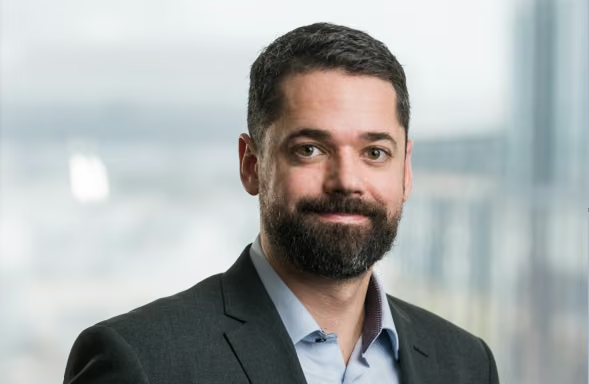
Career reflections: Alan O'Neill
Learning, leading and growing at Langham Hall
Alan O’Neill is part of Langham Hall’s Office of the Managing Partner, working across systems, efficiency and people development. He began his journey in our Real Estate team and has grown through client work and leadership roles over fifteen years.
Early lessons and real impact
I joined Langham Hall when the firm was in its early growth phase in London. I had worked in finance roles at large organisations but wanted to be closer to clients and to the work, making a visible difference. From day one, Langham Hall’s culture stood out: a professional services environment with immediate client exposure and clear accountability. I enjoyed seeing the direct impact of my work on clients and the firm. Those early years were fast-paced and full of learning. I studied for my CIMA qualification alongside colleagues who have since become lifelong friends.
Opportunities for development
Langham Hall’s commitment to development has been a constant throughout my career. Two years after joining, I began building my own team, passing on what I had learned and seeing others progress in their roles. That experience reinforced the importance of developing people and supporting them to take the next step.
As I moved into a Senior Manager role within the Real Estate team, I balanced client work with team leadership before stepping into a Director position. I continued to be involved in fund administration while also taking on broader projects across standardisation and systems. Working with HR, Operations, Technical and Payments teams gave me a wider view of how our internal tools support client service.
More recently, my role in the Office of the Managing Partner has centred on firm-wide initiatives around systems, efficiency and people development.
The apprenticeship model in practice: developing talent from within
The apprenticeship model has been central to Langham Hall since I joined. The firm has always invested in people and their development through consistent training, study support and structured mentorship. This approach builds confidence, skills and judgement.
I was fortunate to have exceptional mentors who guided me through early client interactions and helped refine my technical skills. The focus was on learning quickly, taking ownership and understanding how to ease the workload of those around me. Regular one-to-one sessions went beyond day-to-day tasks, offering space for feedback and development. That experience shaped how I now approach leadership and the time I invest in others.
Alongside on-the-job learning, I have benefitted from professional coaching and external training to prepare for senior roles. The greatest influence has come from senior colleagues who shared their time and experience, encouraging me to take on new challenges with confidence.
Advice for those starting their career
My advice to anyone starting out would be to embrace the opportunities that come with a growing business.
- Be curious, take initiative and step outside your comfort zone. The exposure you gain and the lessons you learn are invaluable.
- Maintain strong relationships with clients, colleagues and mentors. Our culture is built on collaboration and support, which makes the work rewarding.
- Focus on making life easier for the team around you; that mindset accelerates both learning and trust.
Reflections on the journey
The business has grown in ways that are almost unrecognisable from when I joined, yet our core values have remained constant. I am proud to have been part of that journey. The professionalism, commitment and shared ambition at Langham Hall are what make it such a special place to build a career.
Explore opportunities
Learn more about our trainee programme and experienced hire opportunities to develop your career at Langham Hall.

Fairness in private asset funds: waterfalls and equalisation
Private asset funds are growing in prominence across Asia and with them comes renewed attention on how value is shared between managers and investors. Behind the headlines of performance and capital flows lies a critical question: fairness.
Fund structures are designed to align the interests of general partners (GPs) and limited partners (LPs), but conflicts emerge quickly when it comes to compensation. Carried interest, management fees, hurdle rates and equalisation provisions all determine who gets paid, when and on what basis.
Take waterfalls. Should carry be calculated on a deal-by-deal basis, allowing managers to take success fees on winning deals while losses remain uncovered? Or should the portfolio be viewed as a whole, with gains offsetting losses before performance rewards are crystallised? The difference is more than technical; it goes to the heart of whether LPs feel their capital is treated fairly.
Equalisation raises similar questions. Early investors often shoulder more risk, committing to a “blind pool” before investments are secured. Later investors may benefit from greater visibility. Without careful structuring, the cost of that timing can be borne unevenly, undermining the perception of fairness across LPs.
In Japan, standard contracts often lack some of the equalisation mechanisms seen in global markets. But international investors increasingly expect these protections as table stakes.
For GPs, the lesson is clear. Beyond strong returns, investor confidence depends on transparency, alignment, and fairness. These issues are not secondary: they are central to fundraising success.
At Langham Hall, we help managers design and operate structures that build lasting trust between investors and managers.

Raising Capital in Europe: Q&A with Atlantic-Pacific Capital
Europe’s growing role for US managers
For many US fund managers, Europe is shifting from a secondary consideration to a strategic priority. Strong institutional demand, a stable regulatory environment and a track record of significant commitments make the region an increasingly important source of capital.
At Langham Hall, we have seen this first-hand. The number of non-EU funds we service raising capital under National Private Placement Regimes (NPPR), one of the key routes into Europe, has risen by 250% since 2020, with total AUM increasing from €123 billion to €499 billion*. For scaled, well-positioned managers, expansion into Europe is becoming a logical next step: opportunity-driven, not defensive, and a way to diversify LP bases and deepen institutional access.
To explore what it takes to succeed, we spoke with Alexandra Cromer, Partner at Atlantic-Pacific Capital (APC), who shares her perspective on European investor expectations, regulatory pathways and the practical steps US sponsors can take to build a strong market presence.
Q: Firstly, can you tell us a little more about your experience raising capital in Europe?
Alexandra Cromer (AC): As a global organisation with thirty years of capital raising experience, Atlantic-Pacific Capital considers Europe a key fundraising market for our clients. The US remains the largest market for us; however, with established distribution capabilities on the ground in Europe, we raise meaningful capital each year from EU investors (around a third), with commitments also secured from LPs in the Middle East and Asia.
Part of our role as an advisor is to assist GPs with building a diversified investor base that can be supportive across multiple funds. Part of this process involves educating clients on how to access European capital. Engaging with an agent who understands the nuances of marketing in Europe and has deep relationships with institutional investors across the various countries is vital.
We take a very customised approach to each fundraise, spending time with our GPs before formally launching to develop the right “go-to-market” strategy. Our objective is to ensure our capital raises are efficient and tailored to the ambitions of the client; this requires preparation.
For US managers, whether first-time or established, seeking to raise capital in Europe, determining where we believe there will be interest is the first step in the process. This helps refine our approach. Given there are significant costs associated with marketing in Europe, for many (first-time funds or even a later fund), availing the National Private Placement Regime (NPPR) makes sense especially if it is a more targeted outreach campaign. In addition to the costs being less onerous than the full AIFMD marketing passport, we have been successful raising capital from LPs in the Nordics, UK, or Switzerland – locations with less complex regulatory requirements – as these investors are often more receptive to earlier funds, especially high-pedigree spin-outs with track record attribution. For more established managers who may have spent some time building brand awareness in Europe, we may collectively decide AIFMD is the better route to maximise capital raising opportunities. A considered hosted premarketing campaign (especially for funds raising >$1bil) can assist with the decision between NPPR and Lux fund under AIFMD.
Q: How attractive do you really think the opportunity in Europe is for North American fund managers? In other words, is the juice really worth the squeeze?
AC: There are several reasons US GPs consider Europe when looking at other geographies to raise capital from – investor diversification is often a key objective. Embarking on the international fundraising campaign can offer a path to increasing their fund size. Others consider European investor support as validation of their firm or fund strategy. There are also GPs with a niche strategy that is well suited to the European market (e.g., energy transition, Article 8 / Article 9 funds).
Ticket sizes can vary in Europe, not just across geographies and types, but also for strategies. There are large institutions seeking to be meaningful partners writing EUR 75m+, supported by a significant constituent of LPs committing € 20-60m tickets which can materially impact fundraising momentum. There is less of a herd mentality in Europe than say Asia, although of course it is certainly helpful if there is European support for a manager, especially if they are like-minded investors, and/or are considered by the market to be a tier one LP.
There is generally strong appetite for high-quality US opportunities from European LPs. This is a sentiment we often see when speaking with top-tier lower- and mid-market PE GPs who consistently attract domestic US support. However, there is a plethora of service providers, such as Langham Hall, that can support managers with the on-going reporting obligations and administrative challenges. The regulatory landscape should not be the reason that US managers shy away from Europe. Working with an agent that can identify early on key European investors and provide the manager with a dedicated road map is essential, this makes the process more efficient, and ultimately fruitful.
It continues to be difficult to displace an incumbent manager if they have delivered, and allocations for new and existing relationships across both Europe and the US remains tight given the lack of distributions over the last few years. Securing capital is highly competitive, especially for new GPs, and we recommend remaining open to exploring options.
Q: What is the biggest difference that you see between North American and European LPs?
AC: Europe has long been leading the way in support for sustainable strategies and initiatives so expect to see highly established and rigorous Due Diligence processes from European investors, especially when it comes to ESG/sustainability credentials. This is much more than a simple tick-the-box exercise; full integration into the fund’s processes from origination through to exit is a must, and not just for infrastructure opportunities.
Traditionally, institutional investors in parts of Europe have been more conservative, with VC and growth generally a smaller allocation of portfolios versus US LPs. Some consider European LPs to have lower risk appetites with a focus on capital preservation, especially given their exposure to infrastructure; however, with recent changes to interest rates, this is shifting. With fixed income or debt offering a similar level of return to say core infrastructure with less perceived risk, there has been some movement up the risk spectrum. This, of course, comes with additional risk requiring investors to rethink how they evaluate managers and opportunities.
The US offers a depth of market and performance that has been superior to Europe. The US also offers investors a route to specialisation with far greater options available for backing a sector-specific fund, which has become increasingly of interest as a complement to diversified offerings. We continue to believe, despite some of the current uncertainty, the US will feature in LPs’ portfolios in a meaningful way. Some LPs have noted a material increase in the proportion invested in the US, up from 50% to 75/80%, some as high as 100% demonstrating how attractive they see the opportunity there. At the core, European investors are like all LPs, seeking top-tier managers with a compelling strategy and consistently strong track record.
Q: How should North American sponsors prepare for marketing in Europe for the first time?
AC: Marketing in Europe is not something US sponsors should approach lightly. Preparation is key. This includes finalising all aspects of the offering and developing the full suite of marketing materials. In a crowded marketplace, the ability to be proactive and responsive helps to keep the investors’ attention.
We always advise starting the process early and encourage GPs to utilise pre-marketing. It is helpful to commence conversations with European LPs before fundraising as it can take time to build relationships and get onto LPs’ radar - it is easier to build a relationship when not asking for capital! It is also worthwhile making a trip or two to Europe during the off-season. When part of a well-choreographed marketing campaign, conferences can be additive, helping to increase market awareness, especially for less established GPs with more focussed strategies.
It is also important to ensure that anything relating to ESG/SFDR has been properly considered and there is a clear plan for implementation; it cannot be viewed by LPs as an afterthought for the GP.
Ultimately, it is a competitive market and LPs, by and large, hold all the cards; it is important to know your peers and be able to articulate succinctly your key points of differentiation.
Q: Finally, what is the one piece of advice you would give to a sponsor that is looking to market in the EU for the first time?
AC: Be prepared, be realistic and be memorable (for the right reasons!).
Supporting your European fundraising journey
At Langham Hall, we have guided more than 200 non-EU managers across private equity, credit and infrastructure through their European fundraising journeys. From navigating NPPR to setting up AIFMD structures, our team helps managers make informed decisions and move forward with confidence.
Learn more about raising capital in Europe and the different paths available from NPPR to AIFMD.
*According to Langham Hall’s own regulatory filing data (annex IV): 2019-2024.

AIFMD II: What the Fund Risk Limitation Act means for sub-threshold managers in Germany
The German Federal Ministry of Finance has published a revised draft of the Fund Risk Limitation Act (“Fondsrisikobegrenzungsgesetz”) as part of implementing AIFMD II into national law. This update marks a significant shift in the regulatory landscape for alternative investment fund managers (AIFMs), particularly those operating under the sub-threshold regime.
For fund managers in private equity, venture capital and private credit, the changes are far-reaching: from recalculating assets under management (AuM) based on fair market value to new loan origination and reporting obligations. These developments could push many managers beyond the current thresholds, triggering full AIFM authorisation requirements and introducing substantial operational and compliance challenges.
This briefing explores the key regulatory changes, their practical implications for sub-threshold AIFMs and the strategic options available to managers navigating this shift, including partnering with a regulated Luxembourg AIFM such as Langham Hall.
What is changing and who is affected
The draft law introduces several key updates:
- AuM recalculation: Assets under management (AuM) must now be calculated based on fair market value instead of book value under German GAAP, potentially pushing many sub-threshold AIFMs above the regulatory threshold of €500 million (unleveraged) respectively €100 million (leveraged).
- If the threshold is exceeded, AIFMs must apply for a full license within 30 calendar days and submit complete documentation within three months.
- This means managers would lose access to the lighter regulatory regime, facing increased demands on operational infrastructure, compliance processes, staffing and, ultimately, higher costs to maintain their business.
- Falling under the full AIFM license also requires the appointment of a Depositary, which was previously optional. There is some reprieve here as AIFMD II allows the passporting of depositary services (subject to certain conditions), meaning managers are not limited to only German depositaries
- Loan origination requirements: Sub-threshold managers engaging in loan origination will now face the same organisational, risk and liquidity standards as fully authorised AIFMs. These include retention obligations and borrower restrictions, adding a layer of complexity to what was previously a lighter regime. The only exceptions are shareholder and mezzanine loans, which remain outside the scope of these rules.
- Enhanced reporting obligations: Managers must now provide detailed disclosures on managing directors, significant shareholders and any changes to these positions. This additional transparency raises governance requirements and demands robust internal processes to ensure timely and accurate reporting.
- No expansion of ancillary services: Unlike fully licensed AIFMs, sub-threshold AIFMs are not permitted to offer ancillary services to third parties.
- Expanded lending capabilities: The Act lifts previous restrictions on lending and introduces exemptions from banking monopoly rules for special purpose vehicles (SPVs). This creates new flexibility in private credit and debt, enabling managers to structure transactions more innovatively while remaining compliant.
- Greater alignment with EU standards: AIFMD II aims to create a more consistent regulatory framework across the EU, reducing fragmentation, simplifying cross-border operations and strengthening investor confidence.
Real-world example: A German Venture Capital manager at risk
Under the proposed fair market valuation rules, a German venture capital manager with, say, €480 million in AuM under German GAAP could find themselves above the regulatory threshold almost overnight when one of their portfolio companies goes through a new funding round and a significant increase in valuation. Crossing that line triggers a strict timeline: 30 days to apply for a full AIFM license and three months to submit complete documentation. For most firms, meeting these deadlines without significant internal resources would be a major challenge.
The implications extend beyond compliance. Transitioning to a fully AIFMD-compliant structure requires a fundamental upgrade in infrastructure, processes and staffing. These bring higher costs and greater complexity, diverting attention from the core objective: sourcing attractive investments and delivering value to investors.
Langham Hall’s view
These changes create both risk and opportunity. Many German managers will now need to reassess their fund structures, particularly those relying on the sub-threshold regime.
For many, the most efficient route will be to partner with a regulated AIFM. Langham Hall’s AIFM platform can passport into Germany and enables the transition to full scope seamlessly – providing Host AIFM and Depositary support without the need to build in-house infrastructure. Alternatively, setting up a fund in Luxembourg from the outset futureproofs against such challenges.
How we can help
Langham Hall offers:
- Immediate access to a licensed AIFM platform, avoiding the time and cost of obtaining a full license
- Turnkey onboarding and fund setup
- Full compliance infrastructure, covering risk management, liquidity, reporting and governance
- Depositary services for AIFs domiciled in any EU Member State, leveraging new AIFMD II provisions for cross-border appointments
- Annex IV reporting tailored to EU and non-EU managers, meeting enhanced AIFMD II requirements
- Cross-border expertise, supporting funds with German and EU investor bases
- Flexibility in ancillary services, that sub-threshold AIFMs are restricted from offering.
Langham Hall is well-positioned to guide managers through this transition, providing regulatory certainty, operational efficiency and strategic flexibility. Whilst our team has deep expertise in managing Germany-domiciled AIFs, the increasing complexity of the domestic regime often makes a Luxembourg structure the more practical route.
Luxembourg offers a proven legal framework, an investor-friendly environment and the Commission de Surveillance du Secteur Financier (CSSF)’s pragmatic supervisory approach, all while ensuring full compliance with AIFMD II. For many managers, this provides a more efficient and flexible alternative without compromising on governance or investor confidence.
As the Fund Risk Limitation Act progresses, we will continue to monitor its implementation and support managers as they navigate these changes with clarity and confidence.

Langham Hall supports the launch of Zenzic Capital’s evergreen debt fund, targeting up to $3 billion
Langham Hall, a leading global provider of fund administration and AIFMD services, has supported the launch of Zenzic Capital’s new evergreen debt fund, the Zenzic Real Estate Credit Opportunities Fund. Anchored by leading institutional investor GCM Grosvenor, the fund is targeting commitments of up to $3 billion.
The fund represents a significant expansion of Zenzic Capital’s strategy to provide long-term, flexible financing solutions across the European property market. With a focus on small and mid-market lending, it is designed to address an area where traditional bank finance has continued to retrench, unlocking capital for sponsors and real estate groups across sectors such as residential, student accommodation, industrial and logistics.
Langham Hall is providing fund accounting and administration services to the fund and associated entities from its Jersey, London and Luxembourg offices, as well as Appointed Representative (AR) services. Together, these services have ensured seamless structuring and operational support throughout the fund’s launch.
Tom Pinnell, Head of Commercial (Europe) at Langham Hall, commented:
“We are delighted to support Zenzic with this, their debut institutional fund, which addresses a notable funding gap in the real estate market. With support already from GCM Grosvenor, we look forward to working with Zenzic as this new fund continues to grow.”
Nadine Buckland, CEO at Zenzic Capital, commented:
“Having access to the Langham Hall senior leadership team has been invaluable to us during what has been a complex fund setup. They have provided best practice advice throughout and worked to tight timelines to ensure the launch was a success.”

Between fireworks and fundraising: what reproducibility means for investors
This summer in Tokyo, I again watched the Sumida River fireworks. Each burst of colour looked spontaneous, yet the spectacle followed a script: precise timing, repeatable patterns, familiar choreography. Predictable, yet still compelling.
The fireworks always remind me of an important principle in investment: reproducibility paired with trust.
For investors, reproducibility is about consistency. It is the ability to deliver steady performance through a repeatable strategy, supported by reliable execution. At the same time, investors seek more than predictability. They want managers to demonstrate an edge: something that adds value beyond the expected, without undermining stability. Japanese investors in particular place high value on consistency, perhaps more than many markets.
In Asia today, reproducibility is becoming even more critical. LPs are cautious, fundraising cycles are longer and reporting standards face sharper scrutiny. Managers who can show both consistent results and transparent processes are the ones who will continue to secure investor confidence.
Yet reproducibility alone is not enough. With regulatory demands tightening globally, investors expect visibility into how strategies are implemented: process, risk controls, governance and reporting. Clarity and transparency are no longer optional.
Managers who combine a repeatable, well-understood investment framework with rigorous disclosure and adaptability will stand out. In cross-border fundraising, reputations are not built by performance alone but by consistency and clarity.
At Langham Hall, we work with managers globally to help them deliver the reporting, governance and operational standards that underpin investor trust.
Join our newsletter
By subscribing you agree with our Privacy Policy